Revolutionizing Visual Marketing: The Rise of 3D Shopping Banner with Location Store
In today’s fast-paced digital landscape, businesses and marketers are constantly seeking innovative ways to capture attention and enhance customer engagement. One such innovation gaining traction is the 3D Shopping Banner with Location Store. This cutting-edge visual tool blends immersive 3D graphics with location-based store information, creating a dynamic and interactive experience for users across multiple platforms.
What Is a 3D Shopping Banner with Location Store?
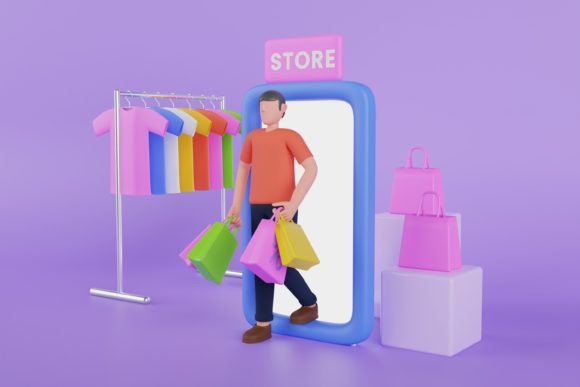
A 3D Shopping Banner with Location Store is a visually rich digital asset that combines three-dimensional imagery or animations with real-time or static location data about physical stores. Unlike traditional flat banners, this type of banner offers depth, motion, and spatial awareness, making it more engaging and informative. It can showcase products in a virtual environment while also providing users with details like store addresses, operating hours, and proximity indicators — all within a single interactive interface.
Available in popular image formats like JPG and PNG, these banners can be integrated into websites, mobile apps, social media campaigns, email marketing, and even printed materials. Their flexibility allows designers and marketers to repurpose them for various use cases without compromising on quality or impact.
Why 3D Shopping Banners Are Gaining Popularity
The shift toward 3D visuals in marketing is not random; it reflects broader trends in how consumers interact with brands online. As attention spans shorten and competition intensifies, businesses need to stand out using high-impact content. A 3D Shopping Banner with Location Store does precisely that by offering an experience that feels more lifelike and less intrusive than standard ads.
- Immersive Engagement: Users are more likely to engage with 3D content because it mimics real-world interactions. For example, rotating a product in a 3D space gives a better sense of size, texture, and design than a static image ever could.
- Location-Based Relevance: Integrating location data makes the banner more personalized and actionable. Shoppers can instantly know which nearby store has the product they want, reducing friction between interest and purchase.
- Mobile Optimization: With the increasing use of smartphones for shopping, these banners are designed to perform well on smaller screens, ensuring accessibility and responsiveness across devices.
Enhancing E-Commerce and In-Store Experiences
The line between online and offline shopping continues to blur. Retailers are investing heavily in omnichannel strategies that provide seamless experiences across digital and physical touchpoints. A 3D Shopping Banner with Location Store plays a pivotal role in this integration by bridging the gap between digital advertising and in-store navigation.
For instance, imagine scrolling through a fashion brand's website and seeing a 3D model of a jacket you can rotate and zoom in on. Alongside it, a pop-up shows which nearby locations have it in stock, with directions and estimated wait times. This level of interactivity reduces the cognitive load on shoppers and increases the likelihood of conversion.
Meeting Consumer Demand for Interactive Content
Consumers today expect more from their digital experiences. Static images and text-heavy pages no longer suffice. They want to explore, interact, and make informed decisions quickly. According to recent studies, interactive content generates up to four times more conversions than passive content. A 3D Shopping Banner with Location Store aligns perfectly with this expectation by offering both entertainment and utility in one package.
Supporting AR and VR Integration
As augmented reality (AR) and virtual reality (VR) become more mainstream, the demand for 3D assets grows. These banners can serve as stepping stones for brands looking to incorporate AR features into their marketing. For example, a user might tap the banner to see how a piece of furniture looks in their living room via AR before checking where to buy it locally.
Retail and E-Commerce
Retailers can use 3D Shopping Banners with Location Store to promote seasonal sales, new arrivals, or flagship products. When placed on landing pages or home screen carousels, these banners not only draw the eye but also guide customers to the nearest store. This dual functionality supports both online visibility and foot traffic, essential for brick-and-mortar success in a digital-first world.
Real Estate and Property Management
While less obvious, real estate professionals are starting to leverage 3D banners to showcase properties in a virtual format. By embedding location data, potential buyers or renters can visualize the property in context and find the closest open houses or offices, streamlining the decision-making process.
Event Promotion and Hospitality
Hotels, restaurants, and event venues benefit from these banners by highlighting their unique offerings in 3D and guiding visitors to their exact locations. A hotel might display a 3D banner of its spa facilities, with embedded links to nearby airports or train stations, helping travelers plan their journey effectively.
Designing for Impact and Usability
Creating a compelling 3D Shopping Banner with Location Store requires balancing aesthetics with functionality. Designers must ensure that the 3D elements are visually appealing but also optimized for performance. Large file sizes or slow rendering can deter users, especially on mobile networks. Using compressed JPG or PNG files helps maintain quality while minimizing load times.
Moreover, integrating location data should be intuitive. Overloading the banner with too much information can overwhelm the viewer. Instead, smart overlays or tooltips can reveal details when clicked, preserving the clean look of the banner while still delivering valuable insights.
Best Practices for Design
- Keep It Simple: Focus on one key message per banner to avoid clutter. Highlight the product or service first, then add location info subtly.
- Optimize for Mobile: Ensure the 3D elements are responsive and load efficiently on smartphones and tablets.
- Use Realistic Lighting and Textures: High-quality 3D renders feel more authentic and trustworthy, improving brand perception.
- Embed Call-to-Actions Strategically: Use buttons or hotspots to direct users to relevant actions, such as “Find Nearest Store” or “View in AR.”
Why Marketers and Business Owners Should Pay Attention
Marketers and business owners are increasingly recognizing the value of 3D Shopping Banners with Location Store in building brand loyalty and driving local engagement. Here are some reasons why:
- Increased Click-Through Rates: The novelty and richness of 3D content often lead to higher engagement and click-through rates compared to traditional banners.
- Better Data Insights: These banners can track user interactions, such as how long someone spends viewing the 3D element or how often they access the location feature. This data can inform future campaigns and improve targeting.
- Adaptability to Multiple Channels: Whether used on a website, app, or print poster, the same 3D banner can be adapted to fit different formats and audiences.
- Future-Proofing Brand Assets: As 3D becomes a standard in UI/UX design, having these assets now ensures your brand remains competitive in the evolving market.
Changing Workflows and Expectations in the Digital Era
With the rise of e-commerce and digital storefronts, workflows have shifted dramatically. Consumers no longer just search for products; they want to visualize them in context before making a purchase. This change has led to an increased reliance on tools like 3D modeling and geolocation services.
Freelancers and creators are also adapting their workflows to include 3D elements. Graphic designers who once focused solely on 2D illustrations now invest time in learning 3D software to meet client demands. Similarly, developers are integrating APIs that support location-based features into their applications to deliver more personalized experiences.
Entrepreneurs launching new retail ventures or online stores are beginning to see the importance of combining digital presence with local accessibility. A strong online campaign featuring a 3D Shopping Banner with Location Store can significantly boost awareness and drive in-person visits.
Example 1: Fashion Retailer Boosts Local Foot Traffic
A mid-sized fashion retailer incorporated 3D Shopping Banners with Location Store into their holiday campaign. Each banner featured a rotating 3D model of a top-selling item, along with a map showing the nearest stores. The result was a 37% increase in foot traffic during the campaign period, as well as a 25% rise in online conversions due to the added convenience of finding the product in person.
Example 2: Tech Startup Enhances Product Launch
A tech startup launched a new smartwatch and used a 3D banner to showcase its design features. The banner included location data for authorized dealers in major cities. Early adopters were able to see the product in 3D and locate the nearest store, leading to faster adoption and fewer returns due to mismatched expectations.
Connecting to Larger Technological Developments
The emergence of 3D Shopping Banners with Location Store is part of a larger trend in digital marketing and technology — the move toward immersive, data-driven experiences. Technologies like WebGL, Unity, and Three.js are enabling smoother 3D integrations on web platforms, while location APIs powered by Google Maps or Apple Maps are becoming more accurate and accessible.
These advancements are not just technical improvements; they represent a cultural shift in how we consume content. We’re moving from a world of passive consumption to one of active interaction. A 3D banner isn’t just seen — it’s experienced. And in a world where experience matters, this kind of visual storytelling is invaluable.
Final Thoughts
The 3D Shopping Banner with Location Store is more than just a flashy graphic — it’s a strategic tool that meets modern consumer expectations and enhances marketing effectiveness. As industries evolve and audiences demand more from their digital encounters, adopting such technologies will be crucial for staying ahead of the curve.
Whether you're a marketer, designer, entrepreneur, or creative professional, understanding and utilizing 3D banners can help you craft more engaging, effective, and future-ready campaigns. The next step is to explore how you can integrate this powerful combination of visuals and location data into your own projects.